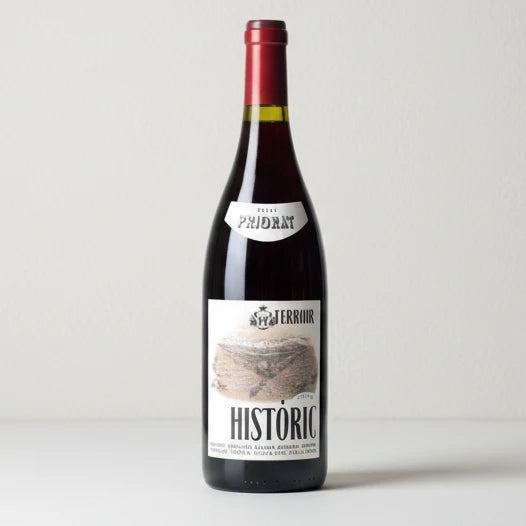
Red Wine Terroir at Limit Historic
Terroir al Limit
Couldn't load pickup availability
Terroir Històric Negre is a red wine from Priorat, produced using the Carbonic Maceration method, reflecting the pure character of organically grown Garnacha and Cariñena varieties. Juicy, fragrant, and produced without intervention, it showcases the most authentic and accessible side of this prestigious region.
Terroir Històric Negre was born with a mission: to encourage young Priorat winemakers to return to their roots and cultivate the family vineyards organically. This red wine is a tribute to the landscape of Torroja and its surroundings, made solely with the traditional Garnacha and Cariñena varieties.
The winemaking process follows a radically respectful approach: manual harvesting, whole bunches, spontaneous fermentation, and brief aging in stainless steel. No oak. No artificiality. Just honest fruit and a liquid landscape.
In the glass, it's fragrant and expressive, with notes of pomegranate, hibiscus, and blackberry, with a base of fennel and smoke that lends complexity. The fine-grained tannins shape a lively and flavorful mid-palate. A wine with nerve, freshness, and simple beauty.
Visual: Bright cherry color with violet trim.
Nose: Aromas of fresh red fruit (pomegranate, hibiscus), with hints of wild fennel and a subtly smoky background.
Palate: Juicy, fluid, and well-structured. Fine tannins, lively acidity, and a refreshing finish.
Vintage: 2020
D.O.: Priorat
Aging: Carbonic Maceration
Type of grape: 75% Garnacha Tinta, 25% Cariñena
Alcohol content: 13.5% vol.
Recommended consumption temperature: 16-18ºC.
Bottle capacity: 750 ml.
Winery: Terroir al Limit (Torroja del Priorat, Tarragona)
Share

Did you know that...?
Carbonic maceration is a traditional winemaking technique that, although popularized in regions such as Beaujolais (France), has roots that could date back to ancient times.
The Romans, in their winemaking practices, possibly discovered this method accidentally by fermenting whole grapes in environments saturated with carbon dioxide, which induced intracellular fermentation.
Although not carried out systematically, this primitive process may have been one of the first forms of winemaking without the use of wood.
Today, this technique produces fresh, fruity wines with soft tannins and a silky texture that express the purity of the fruit, without the intervention of wood.